Blog Article
March 07, 2026 Weather Recap: Tornadoes & Squall Line
Read the full March 07, 2026 weather recap. We break down the PDS tornado outbreak, the massive 1,000-mile squall line, and severe impacts across the South.
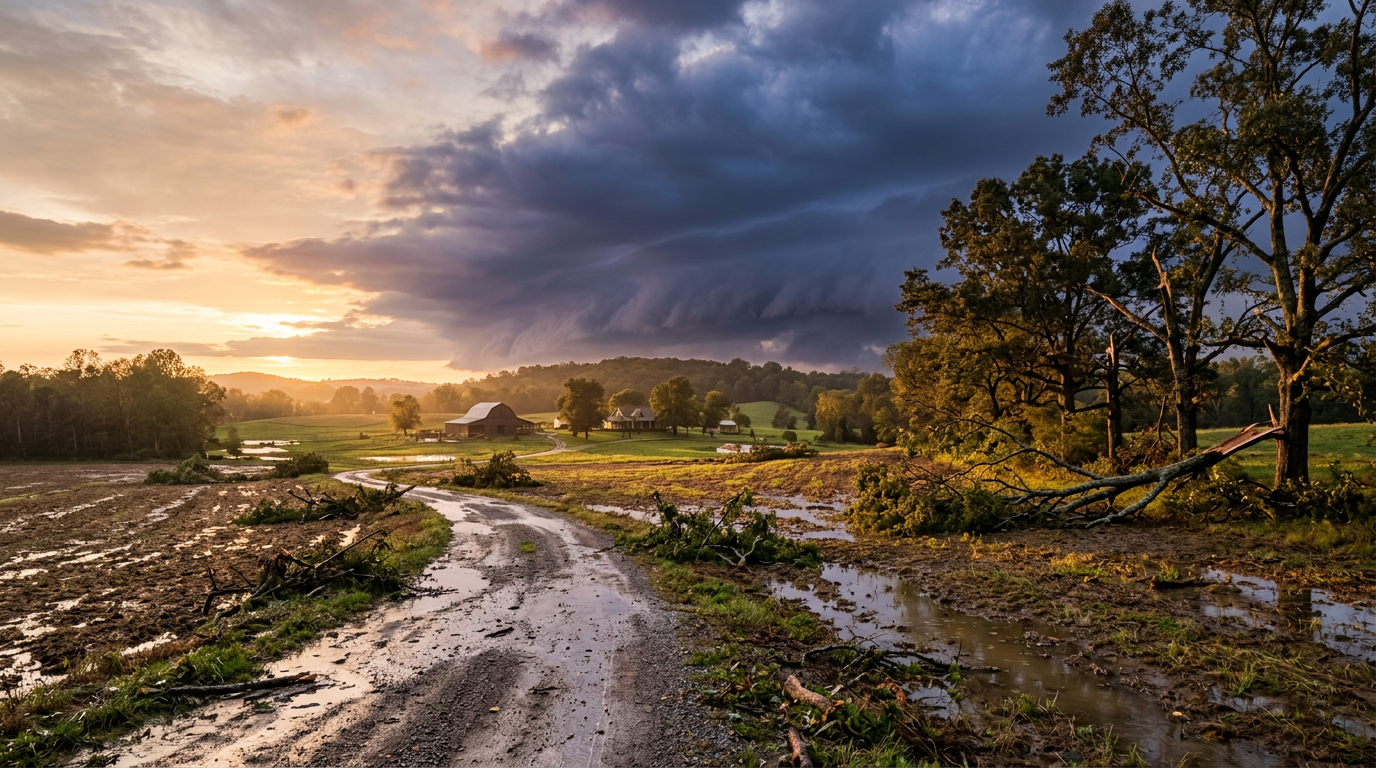
The March 07, 2026 Outbreak: A Day of Extremes
Alright folks, we need to talk about what happened yesterday. March 07, 2026, is going to go down as one of those days that kept meteorologists on the edge of their seats from dawn until dusk. We saw a total of 31 confirmed severe weather reports, and the sheer scale of this system was absolutely massive.
If you were anywhere near the ArkLaTex region or the Mid-South, you already know how intense things got. We are mourning the loss of at least one person in Memphis, Tennessee, after a catastrophic structural collapse during the height of the storm. My heart goes out to everyone affected by yesterday's severe weather.
Let us break down exactly how this beast of a storm unfolded, what the data is telling us, and what is coming next.
How the Day Unfolded
The day started with discrete, spinning supercells. This is always the most dangerous phase for strong tornadoes, and the atmosphere did not hold back.
- Morning Supercells: Things kicked off in Oklahoma and Missouri. We saw measured wind gusts of 80 to 90 mph in places like Pryor, Oklahoma, and Anderson, Missouri. There was even a rapid 13-degree temperature drop in Oklahoma right behind the potent cold front.
- The ArkLaTex PDS Tornado: Get this. During the late morning and early afternoon, a Particularly Dangerous Situation, or PDS, tornado warning was issued for the ArkLaTex region. Radar confirmed a tornado lofting debris 5,000 feet into the air near Rosston, Arkansas. We also saw 2.5-inch tennis ball hail cracking windshields down in Coke and Sterling counties in Texas.
- The 1,000-Mile Squall Line: As the afternoon wore on, those individual supercells merged into a massive Quasi-Linear Convective System. That is a fancy meteorological term for a gigantic, 1,000-mile-long squall line. This wall of wind and water marched eastward through the Ohio and Mississippi Valleys. That is when the devastating Memphis structural collapse occurred.
The Nighttime Flood Threat
Here is the thing about these massive squall lines. Once the tornado threat starts to wane, the water takes over. By the evening and overnight hours, the system transitioned into a major hydrological disaster across the Gulf Coast.
We saw incredible rainfall rates of 2 to 3 inches per hour. This triggered a life-threatening flash flood emergency in Jackson and Natchez, Mississippi. First responders were out making active water rescues, including pulling a trapped occupant from a submerged vehicle in Jackson.
Ground Truth vs. The Forecast
So, how did the forecast hold up against reality?
Meteorologists actually had a very good handle on the structural transition of this storm. The Storm Prediction Center warned us that discrete cells would eventually form into a massive wind-producing line.
However, the sheer intensity of the localized impacts was staggering. The PDS tornado in Arkansas produced a massive debris signature that confirmed our worst fears in real time. We also saw significant infrastructure impacts across multiple states, including several overturned semi-trucks in Missouri and vehicle entrapments in West Virginia and Texas.
Meanwhile, The Rest of the Country...
Y'all, the South was not the only place experiencing wild weather yesterday. The atmosphere was throwing a fit all over the map.
- Montana: We recorded rare, non-thunderstorm wind gusts hitting an unbelievable 100 mph along the Rocky Mountain Front.
- Colorado: The winter side of this system dumped 18.8 inches of snow in Ward, Colorado.
- Alaska: Get this. Alaska experienced active blizzard conditions with 14 inches of snow, and right in the middle of it, a magnitude 5.7 earthquake hit near Attu Station. Talk about a double whammy.

What is Coming Next
The severe weather threat is not entirely over. Today and tomorrow, the risks shift slightly. We are looking at a Slight Risk for severe storms in southern Arkansas, northern Louisiana, and Mississippi. This area could see supercells capable of 2-inch hail and isolated tornadoes.
Out west, we have a critical fire weather concern for northeast New Mexico and the Texas Panhandle due to incredibly dry fuels and high winds. And if you live in the Pacific Northwest, watch out. Snow levels are dropping toward sea level, bringing a rare lowland snow threat to places like the Seattle metro area by Monday night.
Bottom Line
March 07, 2026, was a textbook example of how a severe weather outbreak evolves. It started with isolated, highly dangerous tornadoes and morphed into a sprawling wind and flood event. The 31 confirmed severe reports represent a day of extreme atmospheric energy. If yesterday taught us anything, it is that you have to respect the transition. A storm changing shape does not mean it is getting weaker. It just means the hazards are changing.
Stay safe out there, keep your weather radios handy, and I will keep y'all updated as this next system rolls through.