Blog Article
March 22, 2026 Severe Weather & Solar Storm Recap
A complete recap of the extreme weather on March 22, 2026. From 70 mph severe storms in the Ohio Valley to historic Hawaii floods and a G3 solar storm.
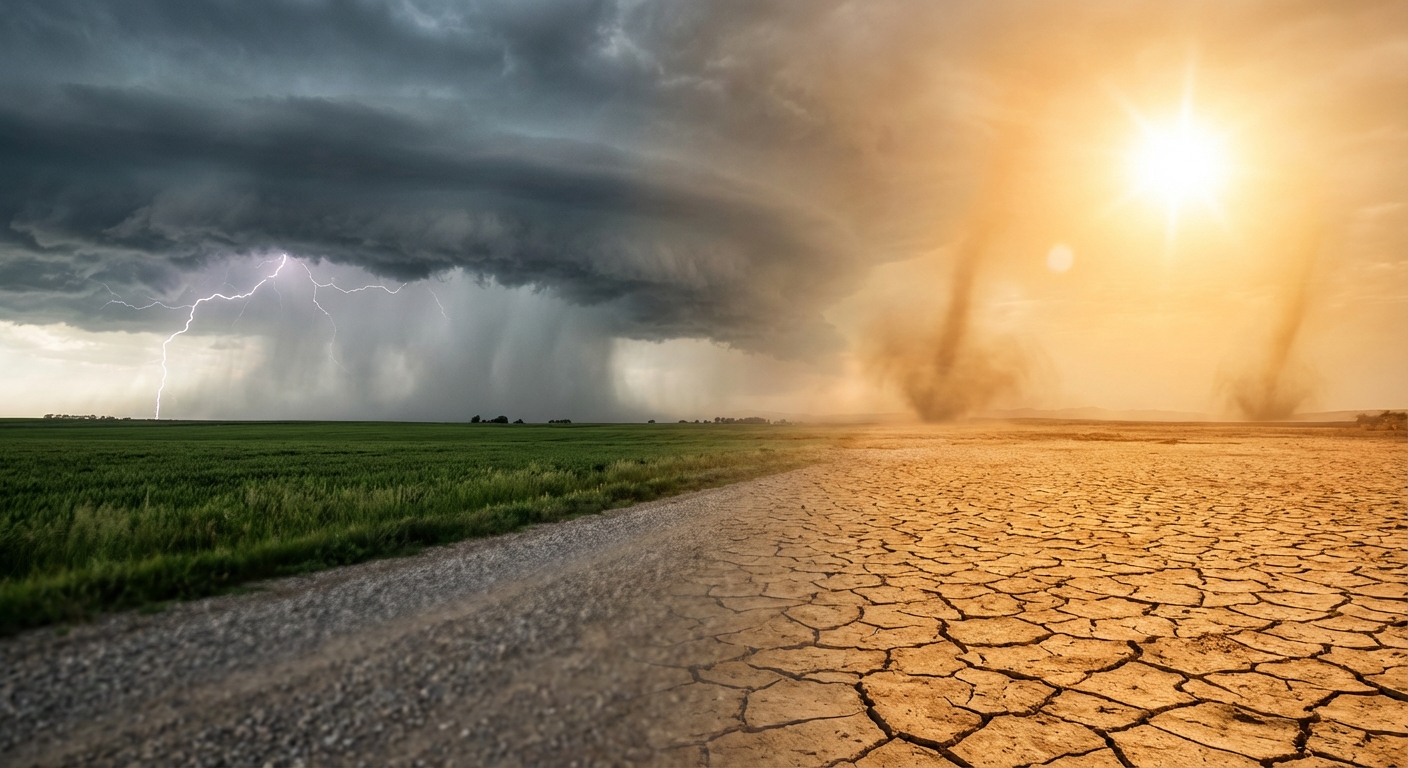
March 22, 2026 Severe Weather and Winter Storm Recap
Alright folks, we need to talk about what happened yesterday. March 22, 2026, is going in the record books as one of the wildest, most multi-faceted weather days we have seen in a long time. Here is the thing. We had severe thunderstorms, major flash flooding, late-season snow, and a massive solar storm all happening at the exact same time.
Let's break down exactly how this day unfolded, what we got right, and what caught us off guard.
The Headline: A Coast-to-Coast Collision
The most dramatic moment of the day came during the late evening hours in the Ohio Valley. We had a severe squall line moving at an absolute blistering pace of 70 mph. At the exact same time these storms were tearing through places like Pennsylvania and Ohio, a rare G3 Strong geomagnetic storm was bombarding our atmosphere. It is not every day you have to worry about 70 mph winds at the surface and global power grid fluctuations up above.
How the Day Unfolded
The day started off rough in the Pacific. A persistent Kona Low brought relentless heavy rain to Hawaii. By the early morning hours, the National Weather Service had to issue a Flash Flood Warning for Maui. We saw rainfall rates of 1 to 3 inches per hour, which led to multiple highway closures in Lahaina and Kihei.
Up in the Pacific Northwest, Washington state was dealing with its own water problems. The Snohomish River crested at a major flood stage of 29.4 feet early in the morning.
By the afternoon, the extreme extremes really started to show. Down in West Texas, it felt like the middle of July. Midland and Odessa hit 101 degrees. Get this, y'all. The relative humidity dropped down to 4 percent. That is incredibly rare for March and created a deeply critical fire weather situation.
Then came the evening. As the Ohio Valley storms fired up, a trained spotter in Brookville, Pennsylvania, confirmed golf ball-sized hail measuring 1.75 inches. While the Ohio Valley was dodging hail, Northern New England was getting blasted with a late-season winter storm. Hartford, Maine, officially measured 6.7 inches of snow from a cooperative observer.
Ground Truth vs. Forecast
So, how did the forecast hold up? We knew the Ohio Valley was going to see severe weather, but the storm motion speeds reaching 70 mph were absolute rocket ships. When storms move that fast, warning lead times shrink, and the straight-line wind threat becomes the primary danger.
The Hawaii flooding was well anticipated, but seeing the actual ground truth of major roads underwater in Lahaina is always sobering. The biggest surprise for many was just how dry West Texas got. A 4 percent relative humidity reading is practically bone dry, making any spark incredibly dangerous.

The Meteorology Moment
What can we learn from this? Let us talk about that 4 percent humidity in Texas. Relative humidity tells us how close the air is to being completely saturated. When you get temperatures near 100 degrees combined with 15 to 25 mph winds and 4 percent humidity, the atmosphere literally sucks the moisture out of every plant, tree, and blade of grass. That is why the National Weather Service issues Fire Weather Warnings. It is a perfect recipe for explosive fire growth.
What Comes Next?
We are not done yet. The weather pattern is staying active. For Tuesday and Wednesday, heat is going to intensify across the central United States.
Looking ahead to Thursday, March 26, the Storm Prediction Center has already highlighted a 15 percent severe weather risk area covering nearly 20 million people. If you live in or around Indianapolis, Columbus, Cleveland, or St. Louis, you need to be paying close attention as a strong cold front moves into the southern Great Lakes.
Bottom Line
Yesterday was a stark reminder that the atmosphere does not care what season the calendar says it is. We had summer heat, winter snow, spring severe storms, and tropical floods all in a 24-hour window. The main takeaway here is that you have to stay weather aware no matter where you live. Keep your alerts turned on, have a plan, and keep your eyes on the skies, y'all.
https://ryanhallyall.com/blog/recap-2026-03-22-march-22-2026-severe-weather-and-solar-storm-recap