Blog Article
June 21, 2026 Severe Weather Recap: Illinois Indiana Tornado Outbreak
June 21, 2026 tornado outbreak across southern Illinois and Indiana produced multiple confirmed tornadoes, PDS warnings, and flooding. Full timeline and verified reports.
June 21, 2026 Severe Weather Recap: The Day the Mid-Mississippi Valley Erupted
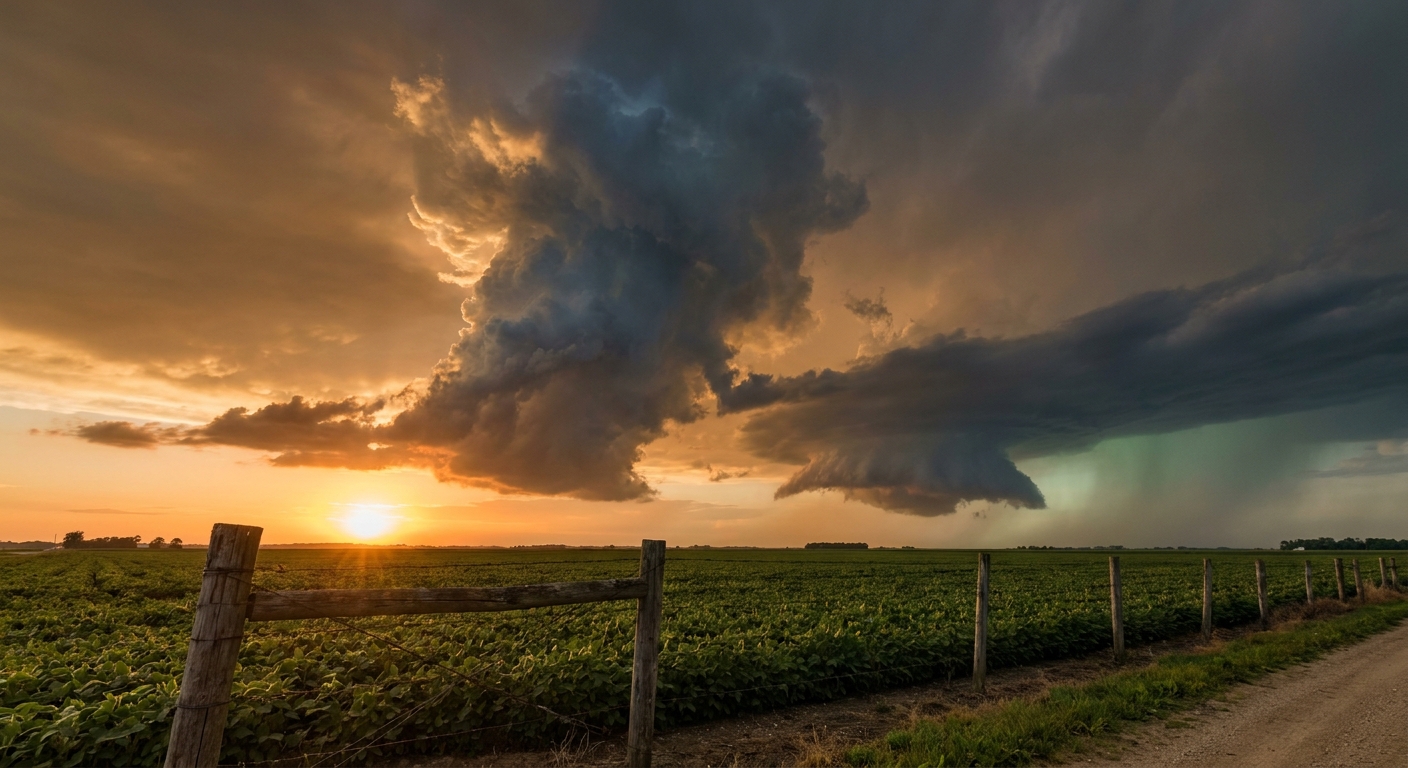
Y'all, yesterday was one of those days that reminds you why we watch the sky so closely. What started as a messy morning MCS across Kansas and Nebraska turned into a full-blown tornado outbreak across southern Illinois and Indiana by late afternoon. And when I say outbreak, I mean it. We had 47 tornado reports in the history summary, two PDS Tornado Warnings in Jefferson County, Illinois alone, and a parent supercell that tracked for over two and a half hours from near McLeansboro, Illinois all the way through southern Indiana.
This was a serious day. Let's walk through what happened.
The Morning: Central Plains MCS and Flooding
The day did not begin with tornadoes. It began with an organized MCS rumbling across the Central Plains, and that system meant business.
- 80 mph measured wind gusts in Lane County, Kansas
- 4-inch hail reported in Adams County, Nebraska
- 3.2-inch hailstone measured with calipers in Dundy County, Nebraska, approaching very large hail criteria
- 3-6 inches of overnight rain across south-central Kansas
- Water rescues in Russell County, Kansas
- I-35 closed in Sumner County due to flooding with vehicle submersion
Meanwhile, tropical moisture was independently producing significant flooding along the Texas and Louisiana Gulf Coasts. So before the tornado story even started, folks in Kansas were dealing with flooded interstates and baseball-sized hail.
The Lull: Early Afternoon (14-17 UTC)
Here's the thing about outbreak days. There's usually a transitional period where the morning convection weakens and the afternoon round has not yet fired. Yesterday had exactly that. Between roughly 14 and 17 UTC, things went relatively quiet as the morning MCS weakened and the atmosphere was rebuilding instability ahead of the next round.
That lull did not last.
The Eruption: Mid-Mississippi Valley (17:40 UTC onward)
Beginning around 17:40 UTC, rapid convective development exploded across the Mid-Mississippi Valley during peak afternoon heating. By 20:00 UTC, the situation had escalated into a major tornado outbreak across southern Illinois.
SPC had Tornado Watch 363 up for central and southern Illinois, southwest Indiana, and southeast Missouri. That watch carried a 60% probability of 2 or more tornadoes and a 40% probability of tornado report-tornado report tornadoes. Those are significant numbers. That is SPC telling you they expect strong tornadoes, not just brief spin-ups.
A second watch, Tornado Watch 365, covered 26 counties in central and southern Indiana, affecting approximately 2.25 million people.
The Peak: 20:40 to 23:00 UTC
This is when things got as bad as they were going to get.
At approximately 21:14 UTC, radar confirmed a tornado with a large Tornado Debris Signature near Newton, Illinois in Crawford and Jasper Counties. That TDS extended to roughly 14,000 to 16,000 feet on the Jefferson County storm. For context, that is debris being lofted nearly three miles into the atmosphere. That tells you the storm was capable of producing significant damage.
Two PDS (Particularly Dangerous Situation) Tornado Warnings were issued for Jefferson County, Illinois:
- KPAH.TO.W.0037
- KPAH.TO.W.0038
Emergency management confirmed tornadoes on the ground. Scanner traffic reported houses destroyed and three people trapped in a collapsed home near Mount Vernon. A third PDS Tornado Warning, KPAH.TO.W.0045, was issued for southeastern Gibson County, Indiana, with emergency management confirming a tornado over Fort Branch.
Verified Tornado Reports from IEM Local Storm Reports
These are the confirmed LSRs from the events data:
- 20:43 UTC - Tornado reported 1 ESE Neoga, IL (Cumberland County). Broadcast media shared drone footage. Time estimated by radar.
- 21:38 UTC - Tornado reported 3 NNE Stephen Forbes State Park, IL. Emergency manager reported a funnel, with firemen confirming a tornado on the ground headed east toward Forbes State Park.
- 21:45 UTC - Tornado reported 3 ESE Annapolis, IL. Official NWS observer confirmed a Tornado Debris Signature on radar.
- 22:26 UTC - Tornado reported 2 NNE Vernon, IL. Fox 2 Storm Runner caught a brief touchdown about 1 mile north of Vernon just east of Highway 51.
- 00:55 UTC (June 22) - Rope tornado reported 1 WSW Spurgeon, IN by emergency management.
- 01:09 UTC (June 22) - Tornado reported 8 NW Dale, IN by a storm chaser.
- 01:19 UTC (June 22) - Tornado reported 2 N Dale, IN by a storm chaser, near I-64 and US 231.
- 03:06 UTC (June 22) - Tornado reported 2 ENE Grandview, IN by an insurance company, with trees down between Grandview and Lewisport.
These are just the verified LSR entries. The full history summary contained 47 tornado events. NWS damage surveys will take days to complete, and we will not speculate on ratings here.
The Long-Track Supercell
One of the most notable aspects of yesterday was a parent supercell that tracked for over 2.5 hours from near McLeansboro, Illinois through southern Indiana. That is an unusually long-lived tornadic storm. Most supercells that produce tornadoes cycle through in 30 to 60 minutes. This one kept going, crossing state lines and affecting communities across a wide corridor.
Eastern Colorado Landspouts
While all of this was happening in the Midwest, eastern Colorado had its own show. Five landspout tornado reports were filed within approximately 35 minutes, between 19:20 and 19:54 UTC. Landspouts are different from supercell tornadoes. They form from stretching pre-existing boundary layer vorticity rather than from a mesocyclone. They are typically weaker, but five in 35 minutes tells you the boundary interactions were active out there.
Human Impact
This is the part that matters most.
- Confirmed fatality from an unwarned tornado near Sedgwick, Kansas. That is a hard sentence to write. An unwarned tornado means people had little to no lead time.
- Unconfirmed fatality reports from Dix, Illinois. We do not have verification on this yet, and we will not treat it as confirmed until we have more information.
- Houses destroyed near Mount Vernon, Illinois, with three people trapped in a collapsed home.
- Water rescues in Russell County, Kansas.
- I-35 closure in Sumner County, Kansas due to flooding with vehicles submerged.
Space Weather Side Note
As if the terrestrial weather was not enough, an M6.9 solar flare produced an R2 (Moderate) radio blackout during the event. That is a notable space weather event coinciding with the severe weather outbreak. It could have briefly degraded HF radio communications on the sunlit side of Earth, which matters for emergency communications during an active weather event.
How Did the Forecast Do?
Here is where we are honest.
The previous blog post, published the morning of June 22, was forecasting the follow-up pattern for June 22, not June 21. So we cannot directly compare it to yesterday's outbreak. But what that post identified was correct: the pattern was shifting eastward, with the Mid-Atlantic and Southeast in a Slight Risk for June 22, and the High Plains taking the stage for Days 2 and 3.
Looking at today's SPC outlooks, that verification is holding up. Day 1 has a Slight Risk from the Southeast into the Mid-Atlantic, matching what was predicted. The High Plains Slight Risk for Tuesday (Day 2) covering eastern Colorado into western Kansas and northern Oklahoma is also still in place.
For June 21 itself, the SPC tornado watch probabilities (60% for 2+ tornadoes, 40% for tornado report-tornado report) tell us the forecast was aggressive and, unfortunately, correct. The outbreak materialized as advertised.
What Is Coming Next
The active pattern does not let up immediately.
- SPC Day 1 (June 22): Slight Risk from the Southeast into the Mid-Atlantic, plus the central and northern High Plains and the ArkLaTex. Damaging wind is the primary threat at 15% probability (Level 2). Isolated tornado threat at 2%.
- SPC Day 2 (June 23): Slight Risk across eastern Colorado into western Kansas and northern Oklahoma. Very large hail and damaging winds are the main threats.
- SPC Day 3 (June 24): Slight Risk across the central High Plains. Large to very large hail is the primary concern.
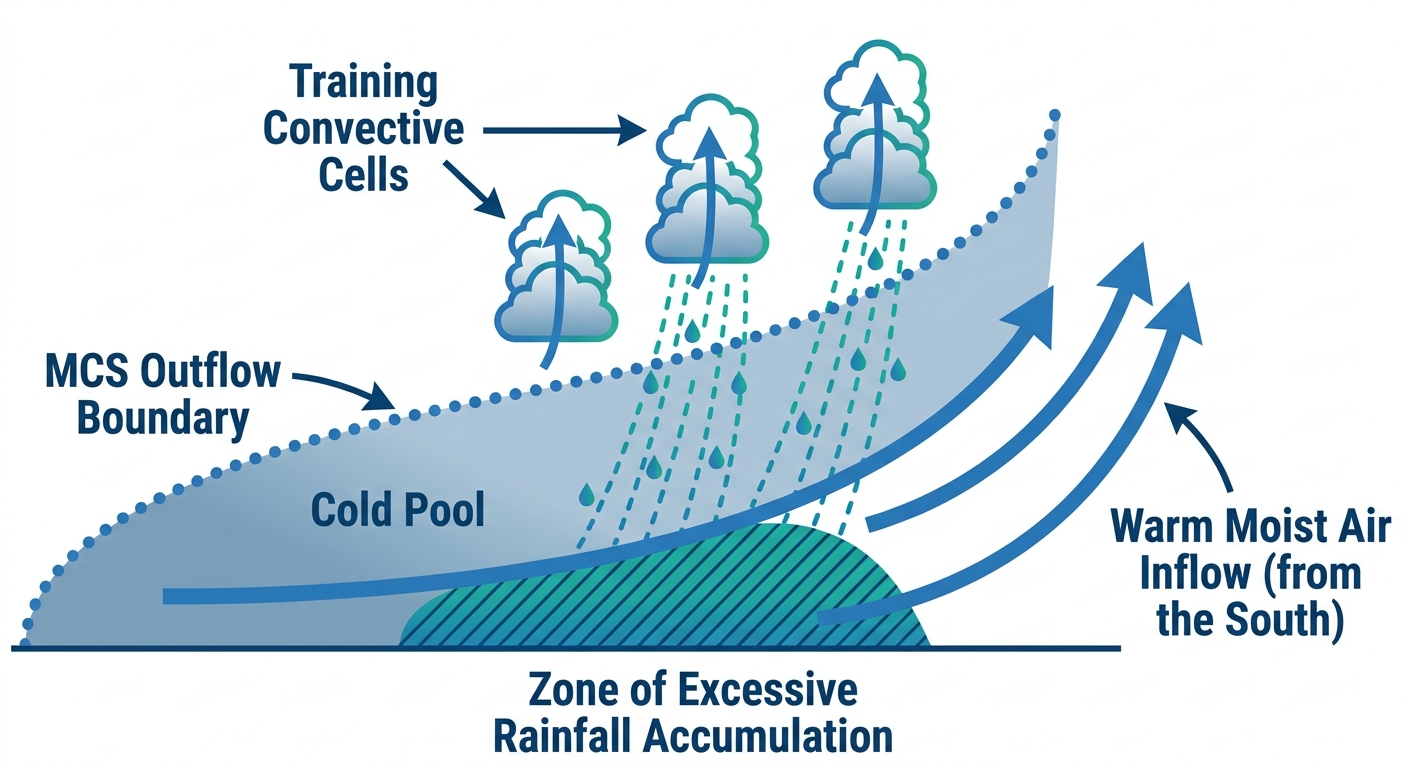
- WPC Day 1 Excessive Rainfall: Moderate Risk from northern Arkansas to western Tennessee and far northwest Mississippi. An MCS is moving across eastern Oklahoma with nearly stationary thunderstorms along an outflow boundary. Flash flooding is a real concern today in that corridor.
- WPC Day 2: Slight Risk from the central and southern Plains to the lower Mississippi Valley.
- WPC Day 3: Slight Risk again from the central and southern Plains to the lower Mississippi Valley.
What Meteorologists Can Learn From This
A few takeaways for those of us who study these events:
- The lull matters. That 14-17 UTC gap between the morning MCS and afternoon redevelopment was the atmosphere reloading. When you see that pattern on a day with strong shear and instability, the afternoon round is the one to watch.
- Long-track supercells in the Midwest are possible in June. We often associate long-track tornadic storms with the Plains in May, but the June 21 event showed that the Mid-Mississippi Valley can produce them too when the ingredients align.
- The unwarned Sedgwick fatality is a reminder that not every tornado is preceded by a warning. Landspouts and non-supercell tornadoes can form quickly and with little radar signature. This is an area where research and detection need to keep improving.
Bottom Line
June 21, 2026 was a bad day in southern Illinois and Indiana. Multiple confirmed tornadoes, two PDS warnings in one county, a long-track supercell, a confirmed fatality from an unwarned tornado in Kansas, and destructive flash flooding across the Central Plains. The SPC watches with their aggressive tornado probabilities verified well. The atmosphere did what it was set up to do.
If you are in the Mid-Atlantic today, pay attention to the Slight Risk. If you are in northern Arkansas, western Tennessee, or northwest Mississippi, the WPC Moderate Risk for excessive rainfall means you need to be alert for flash flooding. And if you are in the High Plains, Tuesday and Wednesday have your name on them for large hail and damaging winds.
The pattern is active. Keep your weather radio on.