Flooding
Level 2 flash flood risk for NJ, Delaware and New York on Thanksgiving Day
By Ryan Hall, Y'all Weather Desk · Published · Updated
Written by our automated news desk from National Weather Service data.
What's new: Added our GFS model rain map for Thursday and the Hudson River tidal flood advisory.

Key points
- Where: New Jersey, Delaware and New York.
- When: 7 AM Thursday through 7 AM Friday, Eastern time.
- What: A Level 2 of 4 (Slight) flash flood risk.
- What it means: Flash flooding is possible on roads during Thanksgiving travel. We have no official rain total for the area yet.
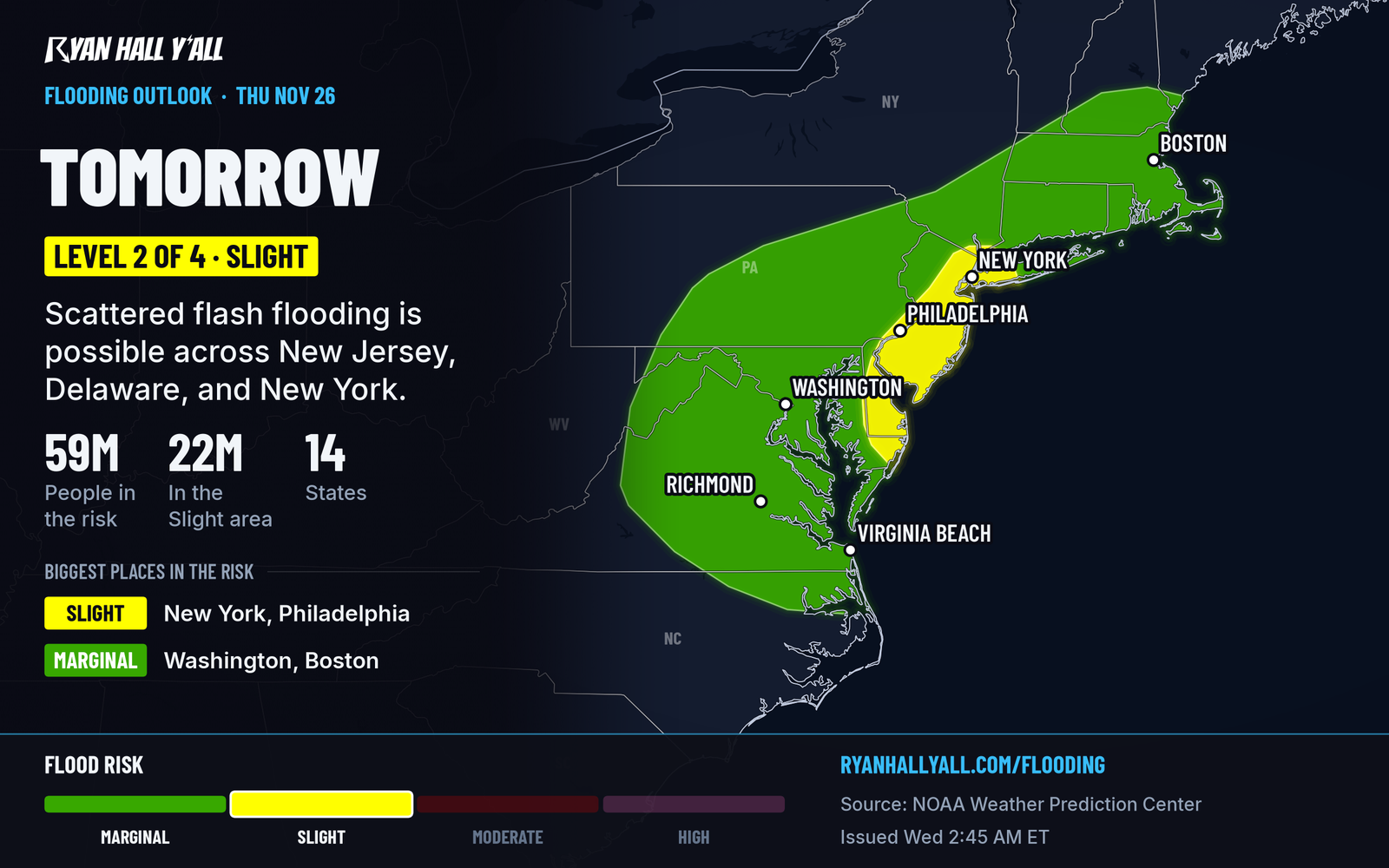
A Level 2 of 4 (Slight) flash flood risk covers New Jersey, Delaware and New York on Thursday, Nov. 26, which is Thanksgiving Day. The outlook runs from 7 AM Thursday to 7 AM Friday, Eastern time, and heavy rain could cause flash flooding in that window.
This is the lower half of the scale, so it is not a major flooding setup. It does land during the Thanksgiving travel period.
Where the flash flood risk sits
The Slight risk is outlined across New Jersey, Delaware and New York. The zoomed map below shows the same area up close.
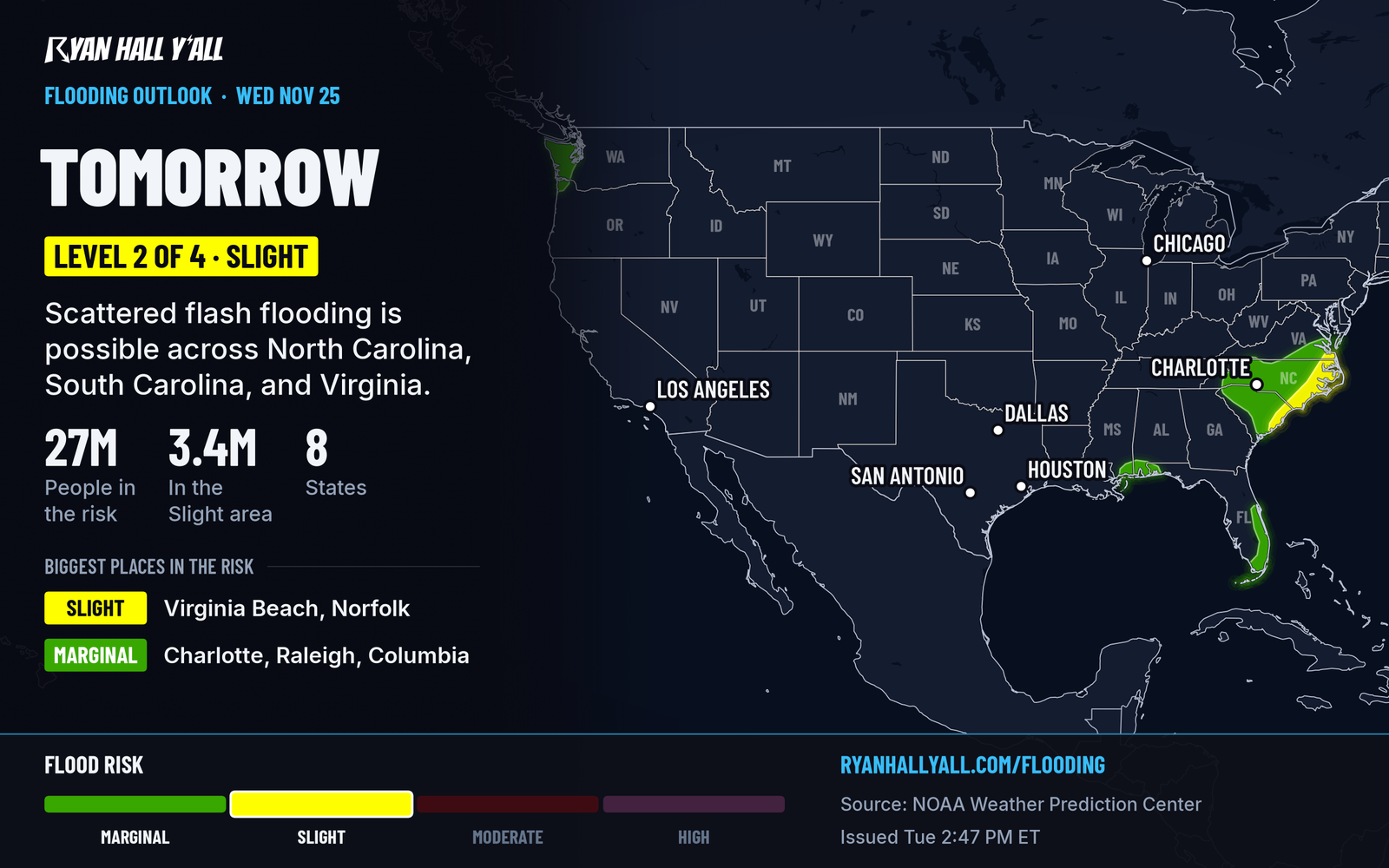
This is a step up from Tuesday afternoon, when the Thursday outlook only had a Marginal risk (Level 1 of 4) from the southern Mid-Atlantic to southern New England.
What one computer model does with the rain
Our new model map shows the GFS rain forecast for the same 24 hours, from 7 AM Thursday to 7 AM Friday. It comes from the 7 PM Tuesday (00Z Wednesday) run of the model. Use it to see where this one model wants to put the rain. It is a single model, and the official flash flood outlook is still the call. The exact placement of the heaviest rain can shift between runs.
Tidal flooding on the Hudson River
Separate from the rain, a Flood Advisory is up for the Hudson River in Westchester, Rockland, Orange and Putnam counties in southeastern New York. Minor to locally moderate tidal flooding is expected around high tide from Thursday morning through Friday morning. The advisory runs until 1:15 PM Friday.
What it means for Thanksgiving travel
Flash flooding happens when rain falls faster than the ground and storm drains can take it. Flash flooding can affect city streets, underpasses, creeks and low spots along roads. If you are driving the New Jersey Turnpike, I-95 or other highways in these states on Thursday, check our interstate driving outlook before you leave.
We do not have a rain total for New Jersey, Delaware or New York yet, so we will not guess one. The timing window is a full 24 hours, so we can't yet say which hours will be the worst.
For context, a Level 2 of 4 flash flood risk covers North Carolina, Virginia and South Carolina today, Wednesday. Thursday's risk is farther north.
What to do
- Plan around the outlook window. This Level 2 outlook runs from 7 AM Thursday through 7 AM Friday.
- Never drive through water over the road. Turn around and take another route.
- Watch low spots. If you live in a basement apartment or park in a flood-prone lot, move the car and valuables up before the rain starts.
- Clear leaves from storm drains near your house. It is late November, and clogged drains make street flooding worse.
- Keep alerts on. Active flood watches and warnings show up on our live warnings page, and you can sign up for free Y'all Alerts.
We update the flash flood outlook as new data comes in. Check it again Wednesday night and Thursday morning, because the highest-risk area can shift.
Bottom line
Thursday brings a Level 2 of 4 flash flood risk to New Jersey, Delaware and New York during the Thanksgiving travel period. Leave extra time, and don't drive through water on the road.
Explained: What the flash flood risk levels mean, from Level 1 to Level 4, Flood Advisory, Watch, Warning and Flash Flood Warning explained
More on Mid-Atlantic flooding, November 2026
Places in this story: New York City, NY
Sources
- WPC Day 2 Excessive Rainfall Outlook, NOAA Weather Prediction Center, issued
- NOAA GFS 2026-11-25 00Z, APCP 0-60 h minus 0-36 h (NOMADS filter), NOAA National Centers for Environmental Prediction
- GFS, 2026-11-25T00:00:00+00:00 run, NOAA National Centers for Environmental Prediction