Weather news
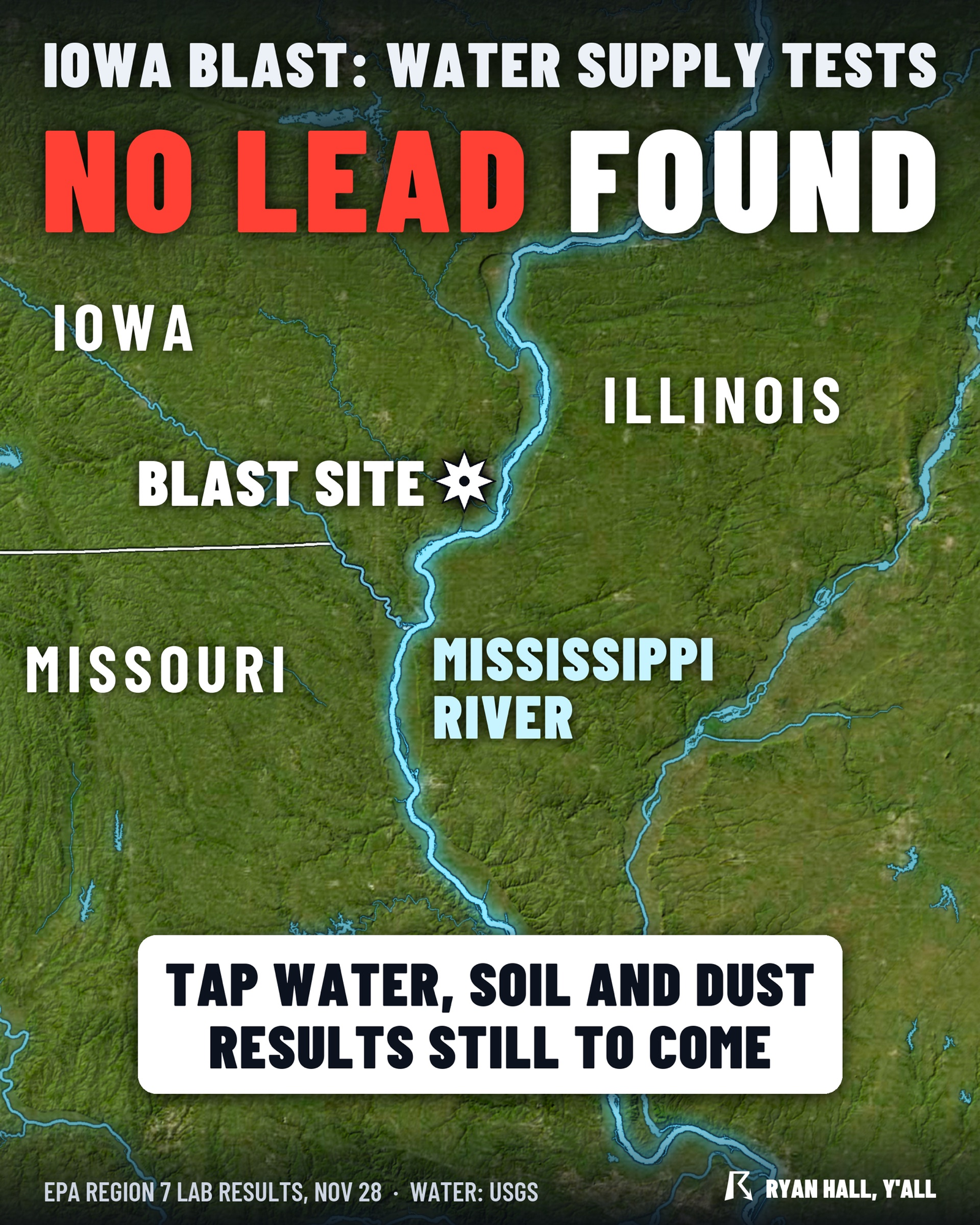
No lead in 38 public water supply samples after Iowa plant blast
By Ryan Hall, Y'all Weather Desk · Published
Written by our automated news desk from National Weather Service data.

Key points
- What: No lead in 38 post-detonation water samples from public water supplies.
- Where: Public water supplies sampled after the detonation at the Iowa Army Ammunition Plant in Middletown, Iowa.
- When: The blast was around 9 AM Central on Wednesday, Nov. 25. EPA posted these results Saturday, Nov. 28.
- What it means: The water that public systems draw in and the treated water they send out showed no lead. Tap water, soil and dust results are not in yet.
EPA found no lead in 38 water samples taken after the Wednesday, Nov. 25 detonation at the Iowa Army Ammunition Plant in Middletown, Iowa. The samples came from public water supplies and included both finished, treated drinking water and untreated water at the intake. EPA released the results Saturday, Nov. 28.
This is the first batch of post-blast lab results. Tap water, soil, dust and lab air samples are still being processed.
What the lab found
Of the 38 samples, some were finished drinking water that had already gone through treatment. The rest were untreated water at the intake, which is where a system pulls water in. Not one showed lead.
These results cover public water supplies. They don't speak to tap water inside homes, soil or dust. Those samples are still at the lab.
What was tested before the blast
EPA sampled 35 drinking water sources across Iowa, Illinois and Missouri before the detonation. None sat inside the path the plume took. Four of them showed low lead levels even before the blast: Mark Twain Lake in Missouri at 1.62 parts per billion, the Illinois River in Illinois at 1.13, and the Mississippi River in Illinois at 1.36 and 2.12.
All four were well under the 15 ppb action level, and none of that lead came from the blast. That matters for the next batches of results. A small reading in a river or lake can be there already, so the before-and-after comparison is what tells the story.
What is still at the lab
EPA says more results will post at epa.gov/IowaData over the coming days:
- Post-detonation tap water
- Soil, from both structures and non-structures
- Indoor and outdoor dust
- Lab air samples
The effort is big. EPA has collected more than 3,200 samples so far, about 1,632 from before the blast and 1,607 from after, as of 5:45 PM Central. It has resampled 187 homes and sampled 27 parks, schools, daycares and churches.
This post says nothing about air. Our earlier caption on the air readings still stands. See our Instagram story for the latest on that.
What to do
- Check epa.gov/IowaData for the tap water, soil and dust results as they post.
- Watch your local water utility's notices. They are the source for your own water.
- If you want a heads-up on weather that could affect the area, sign up for free Y'all Alerts and check active warnings.
Bottom line
The first 38 post-blast water samples from public supplies came back with no lead. That is good news, but it is one piece of a bigger set of tests, and we'll watch for the tap water and soil results.
| Value | Note | |
|---|---|---|
| Illinois River, IL | 1.13 ppb | Before the blast |
| Mississippi River, IL (sample 1) | 1.36 ppb | Before the blast |
| Mark Twain Lake, MO | 1.62 ppb | Before the blast |
| Mississippi River, IL (sample 2) | 2.12 ppb | Before the blast |
| Action level | 15 ppb | The level that triggers action |
Sources
https://ryanhallyall.com/news/no-lead-in-38-public-water-supply-samples-after-iowa-plant-blast